


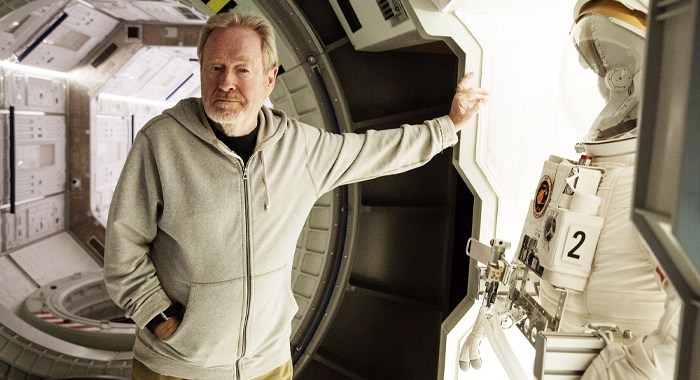
With the upcoming release of Sir Ridley Scott’s The Dog Stars, it’s a great time to look at the filmmaker’s impressive body of work. Known for being a jack of all trades, and specifically as a master in the works of science fiction, horror, and fantasy, Scott is one of the most celebrated directors of his time. With The Dog Stars, he returns to sci-fi with a post-apocalyptic tale of survival and hope, centering on a pilot and a former marine who band together against outside threats in a world devastated by a global pandemic.
Recommended: All Ridley Scott Movies Ranked
Recommended: The Dog Stars First Reviews
In anticipation of the film, we decided to look at Scott’s filmography, focusing on the 10 films that define his mark on the medium. The list is sorted by year of release and covers four decades of his career. Let’s dive in.
1. The Duellists (1977)
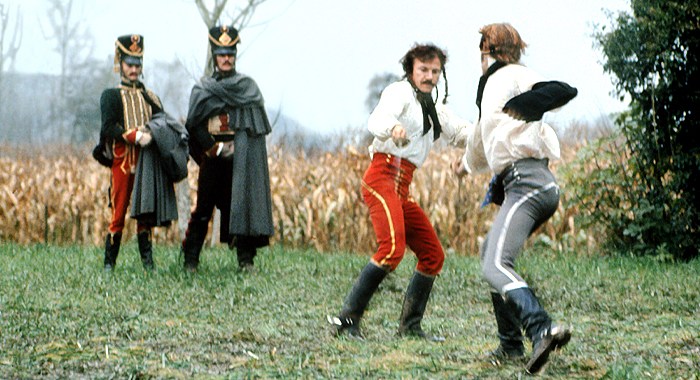
Based on Joseph Conrad’s 1908 short story entitled The Duel, Ridley Scott’s directorial debut focuses upon the decades-long titular duel between Gabriel Feraud ( Harvey Keitel) and Armand d’Hubert (Keith Carradine), set during Napoleon’s time. Premiering at the 1977 Cannes Film Festival and winning a debut filmmaking award, The Duellists put Scott on the map, earning praise for its incredible presentation, production design, choreography, and cinematography. As a period piece, the genre would become one of Scott’s calling cards, and although it is not on its list, 2023’s Napoleon served as a spiritual successor to this work, showing its lasting impact on both the film medium and Scott himself.
2. Alien (1979)
If The Duellists served as Scott’s filmmaking debut, Alien was very much his first major achievement, transforming the filmmaker into a generation-defining talent. A science-fiction horror film, Alien takes place aboard a large spaceship with a cast of fully developed characters, led by the wonderful Sigourney Weaver, who must fight an extraterrestrial threat that boards their vessel and kills anything it touches. So iconic in its execution that it spawned a franchise, what Alien has going for it is a masterful depiction of true, unfiltered horror. It shows that Scott has mastered elevating tension and truly engrossing the audience. Hailed as an achievement from its release date, Alien is a landmark feat and one of Scott’s defining works.
3. Blade Runner (1982)
Like the previous film on this list, Blade Runner proved to be another show of strength for Scott in the genre department. A science fiction epic based on Phillip K. Dick’s 1968 novel Do Androids Dream of Electric Sheep?, the story centers on androids, a future clouded by corruption and prejudice, and an exploration of humanity. Led by Harrison Ford and Rutger Hauer, the film is profound in its thematic material, gritty world, and three-dimensional characters, and there’s a reason it has been hailed as one of Scott’s most monumental efforts. Its technical aspects, such as its editing and overall design, make it stand out compared to other films in the genre, many of which took direct inspiration from it.
4. Thelma & Louise (1991)
Unlike his science fiction efforts, what defines Thelma & Louise is how the film manages to be both a grounded vision from the filmmaker while still managing to be absolutely thrilling and jaw-dropping in its overall execution. Starring Susan Sarandon and Geena Davis, the movie skillfully toes the line between buddy comedy and captivating drama, all in the form of a road trip story between two friends. It’s full of memorable moments and set pieces that stay with the audience, and its final scenes still resonate even three decades after its release. The performances of the two leads coupled with the director’s signature ambitious eye and lens results in something truly immaculate and whole.
5. Gladiator (2000)
Scott’s Best Picture winner Gladiator represents an ambitious effort from the filmmaker, one that pulls out all the stops to craft his own vision of Rome. Starring Russell Crowe in his Oscar-winning role as a grieving man seeking revenge for the death of his family against a ruler portrayed by Joaquin Phoenix, the film boasts multiple thrilling colosseum sequences filmed on a massive set on location in Malta. Behind the incredible action sequences, though, lies a story that is deeply human and emotionally resonant. It very well might be Scott’s most emotionally profound work, which succeeds due to how extreme and visceral the experience ultimately is. In addition to winning Best Picture and Best Actor, Gladiator took home a handful of technical awards and has been well-received since its release.
6. Black Hawk Down (2001)
A war film set in Somalia during the 1993 Battle of Mogadishu starring Josh Hartnett, Eric Bana, and Ewan McGregor, Black Hawk Down works because of its disturbing, brutal, and relentless exploration of what it is to experience the battlefield front and center. It’s visceral and cold to the touch but works for that very reason. Scott is such a well-regarded filmmaker because of his ability to deliver emotional moments even as he keeps the audience at a distance, creating the perfect blend of realism and fiction. There is tragedy, but it’s raw and real, and the impact is substantial thanks to its technical strengths, specifically in editing and sound.
7. Kingdom of Heaven (2005)
Perhaps the most fascinating inclusion on the list, Kingdom of Heaven is Scott’s most frustrating effort, but its directors cut (a Ridley Scott signature) changes one’s entire outlook on the film. A portrayal of the events leading up to the Third Crusade in the 12th century and starring Orlando Bloom as Balian of Ibelin, the theatrical cut is a flawed and messy view of its topics, while the director’s cut reveals more of Scott’s perspective, transforming a story without much substance into one of honor and faith, showing two opposing sides. Scott is such a compelling filmmaker because his films are full of ideas; he’s simply more successful at communicating those ideas in some films than in others.
8. American Gangster (2007)
Akin to some of the films mentioned on this list already, American Gangster works because of the gritty realism that Scott loves to employ, this time centered on 1970s Harlem, New York. Scott crafts a complete vision with help from two layered performances by Denzel Washington and Russell Crowe and lush cinematography by Harris Savides. The film received two Oscar nominations — one for production design and a Best Supporting Actress nod for Ruby Dee — and though it might not be one of Scott’s most popular films, it demonstrates his eye for meticulous period detail and visual storytelling.
9. The Martian (2015)
Perhaps the most populist film of a fairly populist director, The Martian, based on Andy Weir’s novel of the same name, is both a scientific exploration of life on another planet and an empathetic celebration of human perseverance. Led by a commanding Matt Damon, who really defines the film, it’s surprisingly funny in some moments while being heartfelt in others. For many, this was Ridley Scott’s return to form, showing signs of a true comeback after a number of perceived misfires, and for that, the film not only earned Oscar nominations for Best Picture, Best Adapted Screenplay, and Best Actor for Matt Damon, as well as a slew of technical awards, but also brought home over $630 million at the global box office.
10. All the Money in the World (2017)
The last film on this list is famous for perhaps Scott’s most notable strength as a filmmaker: quickness and the ability to adapt to changing circumstances. Focusing on the kidnapping of John Paul Getty III (played by Charlie Plummer) and his mother Gail’s (Michelle Williams) attempts to convince her father-in-law J. Paul Getty (Christopher Plummer) to pay the money for his release, All the Money in the World is notable due to Plummer’s casting. The role was originally played by Kevin Spacey, but after he was accused of sexual misconduct just weeks before the film was scheduled to open, Plummer was added as his replacement, and Scott reshot all of the character’s scenes in nine days. Plummer ultimately earned an Oscar nomination for his work on the film, his last in a celebrated career that spanned more than half a century. All the Money in the World is not only a testament to Sir Ridley Scott’s ability to adapt, but also Christopher Plummer’s consummate professionalism and skill as an actor, and it deserves special recognition in both of their filmographies.
Ridley Scott’s The Dog Stars is currently in theaters. Get your tickets here.